
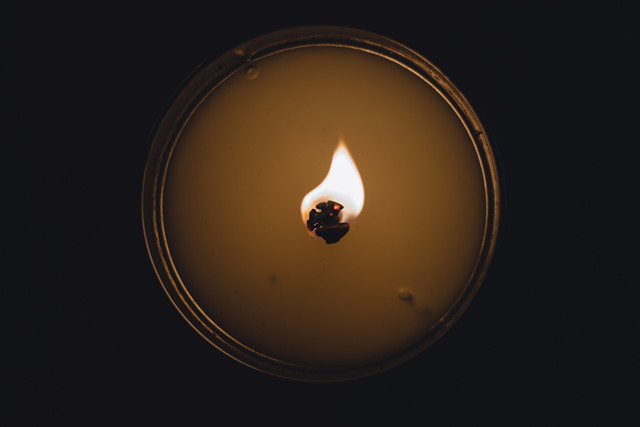
WE WILL NOT LOOK AWAY
There is a particular kind of tiredness that comes from watching suffering you cannot stop. Many of us know it now. The news from Palestine, from Lebanon, from so many places where violence has become ordinary, arrives faster than the heart can hold it. Numbers climb. Names blur. And something in us, quietly, begins to turn away.
This reflection is an invitation not to.
Unitarian Universalism does not ask us to have the right policy or the perfect analysis before we are allowed to grieve. It asks something harder and simpler. It asks us to affirm the inherent worth and dignity of every person. Every person. The child pulled from rubble and the soldier who will not come home. The family that fled and the family that buried someone this morning. The ones whose names we will never learn.
We say this not because it is easy, but because the moment grief becomes selective, our faith has already been compromised. The interdependent web of all existence does not have a far side. There is no suffering happening to other people. There is only suffering happening to people, and we are part of the same web that holds them.
So we name it plainly. The killing of civilians is wrong. The destruction of homes, hospitals, and whole communities is wrong. The hunger used as a weapon is wrong. We do not need to settle every question of history to say that the worth of a human life is not conditional, and that no cause is served by burying children.
As Canadian Unitarian Universalists, we have spent years learning to tell the truth about land taken and peoples displaced on the ground we now live on. That history humbles us. It also asks something of us. A people who have learned to name the cost of looking away in the past cannot practice looking away in the present. Our commitment to truth is not only a commitment to history. It is a commitment to seeing clearly what is in front of us, wherever suffering is real.
This is not a comfortable thing to hold. It would be easier to choose a side and let that choice do our feeling for us. It would be easier to look away entirely and call it self-protection. Our tradition asks for a third thing, and it is the most difficult: to stay present to the full weight of it, to refuse the numbness, and to let our grief move us toward peace rather than toward more division.
What does that look like, practically, for people who are not heads of state?
It looks like refusing to let distance excuse silence. It looks like grieving honestly in our congregations, in our prayers and our meditations and our shared meals. It looks like supporting those doing humanitarian work without conditions on whose suffering counts. It looks like resisting the language that turns human beings into abstractions, and the politics that asks us to celebrate one death to mourn another. It looks like holding our elected leaders to the standard our faith holds us to: that peace, liberty, and justice are meant for all, not for some.
To those carrying out violence, in any name and in any place: we say no. Not in our name, and not in the name of any God or principle worth following. There is no theology and no nation that makes the slaughter of innocents holy.
To those who are suffering, who are afraid, who are grieving people they loved: we see you. We will not pretend your pain is complicated. We will not look away.
We are a small faith in a large and broken world. We cannot end these wars. But we can refuse to let them harden us. We can keep insisting, together, that every life is worth the same grief, and that this insistence is not naivety but the beginning of everything peace requires.
And here is the thing grief can make us forget: no one is insignificant, and no one is helpless. Despair tells us that because we cannot do everything, we can do nothing. Our faith tells us otherwise. The work of welcome happens one person, one family, one act of shelter at a time, and it changes the world that one life can reach.
This is part of why Unitarian Universalists across Canada sponsor refugees: people fleeing violence, rebuilding their lives in new communities, welcomed not as a project but as neighbours. The wars that displace people are rarely the ones we can stop. The welcome we offer afterward is entirely ours to give. It does not ask whose suffering is most visible this week. It simply meets a human being who has lost almost everything and says: there is a place for you here.
May we have the courage to stay present. May our sorrow stay tender enough to move us. And may we keep faith, even now, with the world as it could be.