
Caring for All: How a UU Chaplain is Diversifying Military Ministry
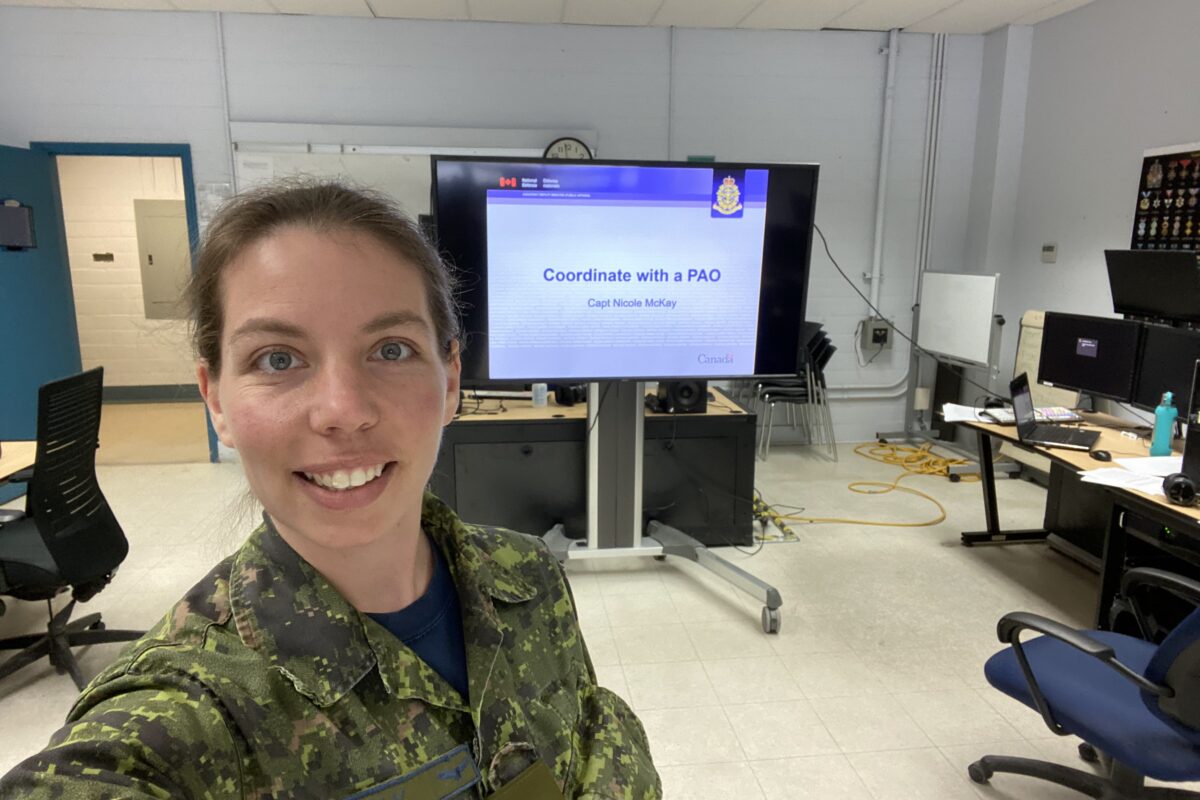
In an inspiring new video from the Canadian Armed Forced we meet Captain (Rev) Nicole McKay, a chaplain at Canadian Forces Base Borden and a pioneer in her field. As the first Unitarian Universalist (UU) chaplain in the Royal Canadian Chaplain Service, Captain McKay is redefining what it means to “care for all” in a modern military environment.
Caring for All: How a UU Chaplain is Diversifying Military Ministry
In an inspiring new video from the Canadian Unitarian Council, we meet Captain (Rev) Nicole McKay, a chaplain at Canadian Forces Base Borden and a pioneer in her field. As the first Unitarian Universalist (UU) chaplain in the Royal Canadian Chaplain Service, Captain McKay is redefining what it means to “care for all” in a modern military environment.
A Call to Diversify
Captain McKay joined the Canadian Armed Forces in 2005, and her journey towards chaplaincy began when she saw an opening for something new in the “Strong, Secure, Engaged” defence policy. She transferred to the Royal Canadian Chaplain Service in 2020. At that time, the chaplaincy was represented only by the Abrahamic traditions: Christianity, Judaism, and Islam. Seeing an opportunity to diversify the spiritual support available to members, she stepped forward as a representative of an emergent spiritual/faith tradition.
Being the first isn’t without its hurdles. Captain McKay shares how navigating a tradition not previously represented brings unique administrative and logistical challenges. However, she isn’t alone; she works alongside others in the Emergent Traditions Caucus to help the CAF chaplaincy grow and evolve to meet the needs of all its members. Alongside Unitarian Universalism, the Emergent Traditions Caucus currently includes chaplains who represent Traditional Indigenous Spiritualities, Humanism, Buddhism, and Sikhism.
Beyond the Pulpit: Active Presence
If you think a chaplain’s job is only about the provision of spiritual and religious ceremonies, services, and lifecycle rituals, Captain McKay’s story will change your perspective. Much of her work involves:
- One-on-one support: Providing compassionate presence and accompaniment; offering spiritual care to members and their families.
- Active chaplain presence: Spending time in unit lines, learning the day-to-day realities of those she serves, and building relationships.
- The Sentinel Program: Overseeing and training the peer-to-peer support initiative, which builds active listening skills and connections to appropriate resources.
As an Air Force person integrated into an Army environment at the RCEME (Royal Canadian Electrical and Mechanical Engineers) School, she emphasizes that building relationships is the heart of her work — and core to who she is as a Unitarian Universalist minister. She lives by a powerful piece of guidance: “They may not remember what you said, but they will remember how you made them feel.”
Why You Should Watch
Whether you are a member of the CAF, a Unitarian Universalist, or simply someone interested in how modern institutions are becoming more inclusive, this video is well worth your time. Captain McKay explains beautifully that her job is to care for all, regardless of their personal spiritual tradition or worldview. Her presence is a testament to the idea that Unitarian Universalism, grounded in pluralism, carries a life-giving message of care and interdependence. From her grounding in Unitarian Universalism, she is resourced to better serve those she serves alongside.
This story takes on new resonance in light of a recent decision by the US Department of Defense to remove Unitarian Universalism from its list of recognized religious designations for military chaplaincy. We share this story as a reminder of what is at stake, and what UU ministry in uniform looks like when it is given room to flourish.
Did You Know?
The Canadian Armed Forces offers a subsidized education program for those seeking to join the Royal Canadian Chaplain Service. The CAF could pay for your degree program and a two-year placement in a congregation or other setting offering spiritual care — providing a potential education pathway for those discerning a call to Unitarian Universalist ministry. For more information on requirements, visit: Chaplain | Canadian Armed Forces