
Truth, Healing and Reconciliation Initiative
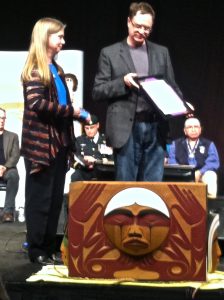
Reconciliation is not a project – it’s our promise. Whether you’re new to this work or deeply involved, there’s a place for you in this ongoing journey of justice, relationship, and renewal.
As Unitarian Universalists, we made a commitment to being in right relationship with Indigenous Peoples in Canada and to putting into practice the principles set forth in the United Nations Declaration on the Rights of Indigenous Peoples. That means listening deeply, learning continuously, and taking meaningful action together.

My personal commitment to Reconciliation is to have one class a month focused on Indigenous culture, stories and realities. I make it a practice always for that to come from an Indigenous source.

–Nan Gregory–
Our Journey of Commitment
Over the past five decades, Unitarian Universalists in Canada have moved from making public statements about justice for Indigenous Peoples to engaging in deep learning and meaningful action. What began as formal resolutions grew into national education efforts, partnerships with Indigenous Elders, artists, and consultants, and spiritual resources to support reflection and change. In recent years, we have been challenged to live into Indigenous sovereignty rather than simply talking about Indigenous rights and settler wrongdoings. This work has evolved into visible acts of solidarity, national commitments to reject colonial systems, and community-based projects that center Indigenous sovereignty. Our journey continues as we learn how to live into right relationship with humility, courage, and love.
Recent Events
Honouring the 10th Anniversary of the TRC
September 2025 marked the 10th anniversary of the Truth and Reconciliation Commission’s Final Report, and the Canadian Unitarian Council invites you to engage deeply with the legacy of the Indian Residential School System and the future of reconciliation.
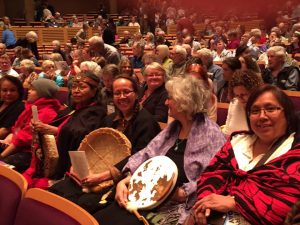 September 17: A special online gathering, “Reclaiming Education”, a powerful conversation with Watsenniiostha Nelson, Director of Education for the Kanehsatà:ke Mohawk community, as she shared her vision for transforming education from a tool of assimilation into a pathway of reclamation and empowerment.
September 24: Congregational Conversations on Reconciliation where folks learned from one another’s experiences regarding relationship building, reconciliation efforts, and more.
September 25: “Engaging with Conciliation”, the Dismantling Barriers and Justice and Equity team covered Land Back as a faith practice and its intersections with barriers to full inclusion, as well as releasing a supplementary toolkit that revisits previous learnings and actions by the Justice and Equity team in support of Indigenous Solidarity. Together, we move from reflection to transformation.
Mapping Our Reconciliation Efforts
As part of the Canadian Unitarian Council’s collective commitment to truth, justice, and right relationship, we are building a database of reconciliation initiatives across the country, including which congregations have repudiated the Doctrine of Discovery and your related actions. This reconciliation database will help us:
- Understand what’s already happening
- Foster collaboration and peer support
- Inform you directly about relevant upcoming programmingCreate an interactive map of our shared history
See the Map
This interactive map highlights the many ways Unitarian Universalist communities across the country are engaging in reconciliation - through education, worship, land-based projects, financial commitments, and relationships with Indigenous partners. From hosting speakers and workshops to commissioning public art, studying the Truth and Reconciliation Commission’s Calls to Action, showing up at powwows and vigils, and sharing land and resources, these efforts reflect a collective commitment to truth-telling, justice, and healing.
How to use the map
- Use the checkboxes on the left to show or hide different kinds of reconciliation work, like education, land projects, financial support, or community partnerships.
- Zoom in or out to see what’s happening in different parts of the country.
- Click on the pins to read about each community’s project.
- Look at the legend to see what each colour or symbol means.
Explore the map to learn, compare, and get inspired by how communities are taking action.
Growing edges
Our growing edges in reconciliation call us to move from learning facts to taking real action, to build lasting relationships with Indigenous partners, and to make our efforts part of ongoing change. We are also learning to unlearn colonial habits, face fears about limited resources, and support Indigenous leadership in Landback, climate justice, and community well-being. We invite you to explore these edges with us and be part of this shared journey.
If you're a Unitarian Universalist involved in this work please take a moment to fill out this short form. (10 mins)
This will allow us to reach out directly with invitations and opportunities to connect, collaborate, and learn from each other. The map will be updated 2x per year.
Programs and Resources
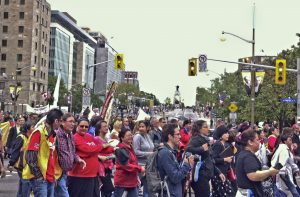
Our reconciliation work is rooted in learning, reflection, and spiritual growth. The following programs and resources are designed to support individuals, families, and congregations in moving from awareness to action. Whether you’re just beginning or deepening your commitment, there’s something here for you.
Guided Learning
To request a copy of any of the resources below or to start a conversation about using it in your congregation, email us at reconciliation@cuc.ca
To help communities move from abstract understanding to lived engagement, the Canadian Unitarian Council launched the Truth, Healing, and Reconciliation Reflection Guides (THRRGs) multi-session, workshop-style learning journeys. With categories in Lower Elementary, Upper Elementary, Young Adult and Adult, the THRRG’s offer age appropriate opportunities for understanding the shared history and current realities of the residential school system. Created between 2015 and 2018, these guides helped individuals and congregations confront settler colonialism, recognize Indigenous resilience, and discern their own responsibilities in building right relationship.
“Specifics about Indigenous traditions, reflecting on how important my identity is to knowing my place in the world/how dependent I am on it, specifics about Canada's policies towards Indigenous peoples (it helped me to clearly recognize the many injustices over time). But there were many other useful things too!” Moira McDonald - Truth, Healing, and Reconciliation Reflection Guide Facilitator, Neighbourhood Unitarian
THR Film Guide Explore themes of colonization, racism and Indigenous resilience with an online national film screening and group discussion toolkit. This program was developed in partnership with the National Film Board of Canada
Uncolonizing Climate Justice: A toolkit that challenges Western thinking around climate activism and centers Indigenous sovereignty and Land Back as real forms of reparation.
Uncolonizing Focus Group Materials are designed for people who have taken the THRRG guides and want to take action to un-colonize themselves individually and collectively as Unitarians. Topics include differentiating between uncolonizing and decolonizing work, identity, worldview, origin stories, protocols & privilege, white fragility, land acknowledgements, and the examining UU principles. Given that it is inward reflecting we include materials that are relevant expressions of contemporary Unitarians including the 8th Principle process and responses.
Reading Materials
Elementary Age Resource List Developed by the THRRG Task Force for Introducing Concepts of Colonialism and Indian Residential Schools to Lower and Upper Elementary Age Groups
Engaging with Solidarity Toolkit: A starting point for collective thinking and community building
Uncolonize or Decolonize? Blog Post: We’ve had a lot of people ask us why we use the terms uncolonize and decolonize. They often wonder if they are interchangeable terms or if we mean to say decolonize.
Blog Post: Truth and reconciliation again? How to move out of shame and into accountability
Watch our Stories
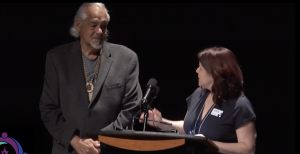 Unsettled and Unafraid: National Worship Service to honour the complex Day of Truth and Reconciliation
Out of Shame, into Oneness with Elder Sharon Jinkerson Brass
Out of Shame, Into Compassion with Educator Deivd Skene
Reconciling with the Land with Educator Deivd Skene
Keynote Address Albert Dumont
Reconciliation is about relationships.
With Gratitude
This work has been shaped by many voices. We want to thank the people who have made the journey with us.
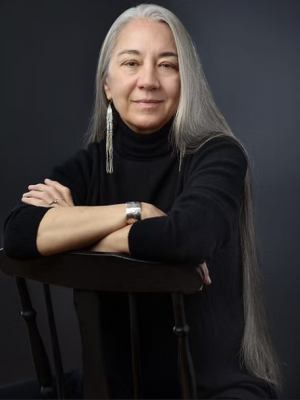
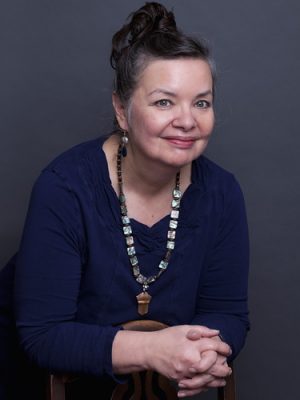 Sharon Jinkerson Brass: Anishinaabe Artist, Healer, and Elder. Sharon has lead many Elders Circles and acts as a consultant for the CUC.
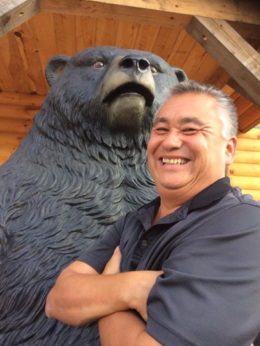

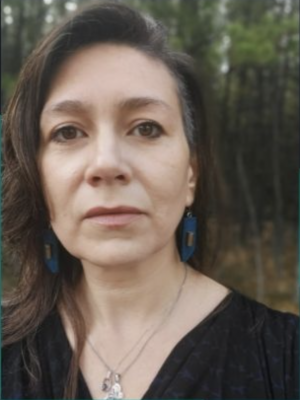
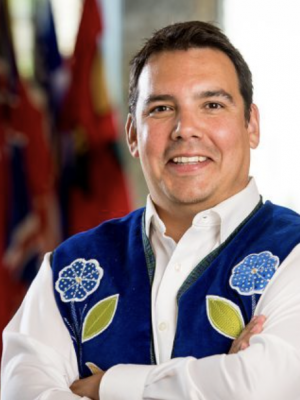
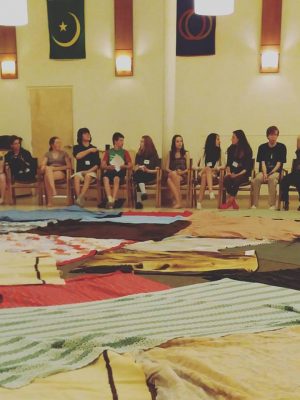



Thank you Sharon, my heart is full, my heart awakened to what I know but needed remembering. A reconnecting. I am so honoured to be in your wisdom and your generosity.
–Debra Thorne–
Timeline of CUC Actions Toward Reconciliation
This timeline reflects our evolving journey of commitment to truth, healing, and reconciliation. As we continue to learn, we are learning to value progress over perfection – recognizing that while we’ve taken meaningful steps, there is still much work ahead. Each milestone represents both growth and the invitation to keep going, together.
Early Declarations
 Between 1964 and 1995, the Canadian Unitarian Council adopted eight resolutions in support of Indigenous justice. These resolutions focused on two key areas: urging the federal government to enact meaningful reforms, and encouraging Unitarian Universalist congregations to build stronger relationships with Indigenous communities. Government-focused resolutions called for the extension of full citizenship rights without loss of treaty benefits, an end to employment discrimination, increased Indigenous self-governance and economic development, and the establishment of urban support centres to assist with housing, employment, and education.
In congregations, the CUC encouraged members to build relationships with Indigenous communities, support public education on First Nations issues, and open channels for Indigenous voices to be heard at local and provincial levels. A CUC landmark 1995 resolution consolidated these commitments, calling on congregations to support land rights and treaty recognition, reject assimilation policies, and offer programs on Indigenous history and culture. It also gave the CUC a public mandate to advocate for justice and established a committee to monitor progress and recommend future actions.
Focus on Education
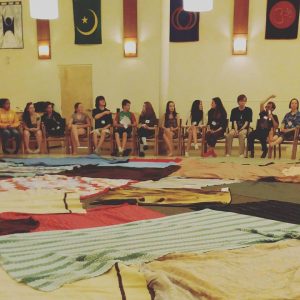 From 2014 to 2019, following our Expression of Truth and Reconciliation, the Canadian Unitarian Council focused on developing educational resources to help Unitarian Universalists engage meaningfully with reconciliation.
This period marked a deep commitment to learning, reflection, and spiritual formation. Central to this work was the creation of the Truth, Healing, and Reconciliation Reflection Guides (THRRGs) - multi-session, age-appropriate programs designed to support individuals and congregations in understanding the history and ongoing impact of colonialism, residential schools, and Indigenous resilience.
These resources laid the foundation for congregations to move from awareness to action, grounded in a shared commitment to right relationship.
Relationships and Action
Building on our initial focus on education, the CUC expanded its learning resources to move beyond understanding reconciliation as a concept, and toward engaging with the concrete actions called for by Indigenous movements such as Land Back.
This shift included the development of tools like the Uncolonizing Climate Justice Toolkit and the Uncolonizing Focus Group materials, which invite Unitarians to reflect on their roles in systems of power and to consider what returning land, leadership, and decision-making really means.
Throughout this period, we also hosted ongoing Elders Circles and special guest speakers, creating space for UUs to listen, reflect, and learn from Indigenous voices in more personal and relational ways. These gatherings deepened our understanding of sovereignty, solidarity, and the spiritual dimensions of accountability.
Most recently, the Canadian Unitarian Council moved to repudiate the Doctrine of Discovery and Terra Nullius, two legal principles that European countries extinguished Indigenous sovereignty and acquired the underlying title to Indigenous Peoples’ lands upon ‘discovering’ them.
Sources
- Native Peoples and Us
- Native Peoples and the Criminal Justice System
- First Nations, A Summary
- The Canadian Unitarian Council commits itself to solidarity with First Nations peoples in their struggles to achieve justice
- 2013: Solidarity Walks (pg 16)
- 2014: Expression of Truth and Reconciliation
- 2015: Proposed Action, Truth and Reconciliation between Aboriginal and Non Aboriginal Canadians , Action Plan in Annual Report, pg 19-22
- 2014: Vyda Ng, UUUNO (UU Office at the United Nations) Spring Seminar presentation
- 2015-2018 Creation of Truth, Healing, and Reconciliation Reflection Guides
- The CUC’s 2016 Sharing Our Faith-package suggests many songs, stories, and readings for worship services and other activities.
- 2017: THRRG Task Force Annual Report (pg 22-23), Hired THR Programme Coordinator (began as administrator)
- 2018: Ripple Effect, Annual Report (pg 21,22)
- 2019: Statement of solidarity with Wet’suwet’en, Annual Report (pg 29-30)
- 2020: Reaffirmation CUC Wet’suwet’en National Voice Statement.2020-02 Annual Report pg 30 Pipelines, Democracy and Aboriginal Title: A Conversation with Dr. Niigann Sinclair
- 2021 Annual Report (pg 35-36)
- 2022 Annual Report (pg 28-33)
- 2023: Annual Report (pg 24) Resolution to Repudiate the Doctrine of Discovery
- 2024: Annual Report (pg 31) Added Terra Nullius to the 2023 Repudiation
- 2025: Mapping our congregational and community efforts towards Reconciliation and Indigenous solidarity, Honoring the 10th Anniversary of the TRC
- CUC representation at Liberal religious educators continental conference - partnering with elder Sharon Jinkerson Brass - 3 days of presentations regarding reconciliation work